

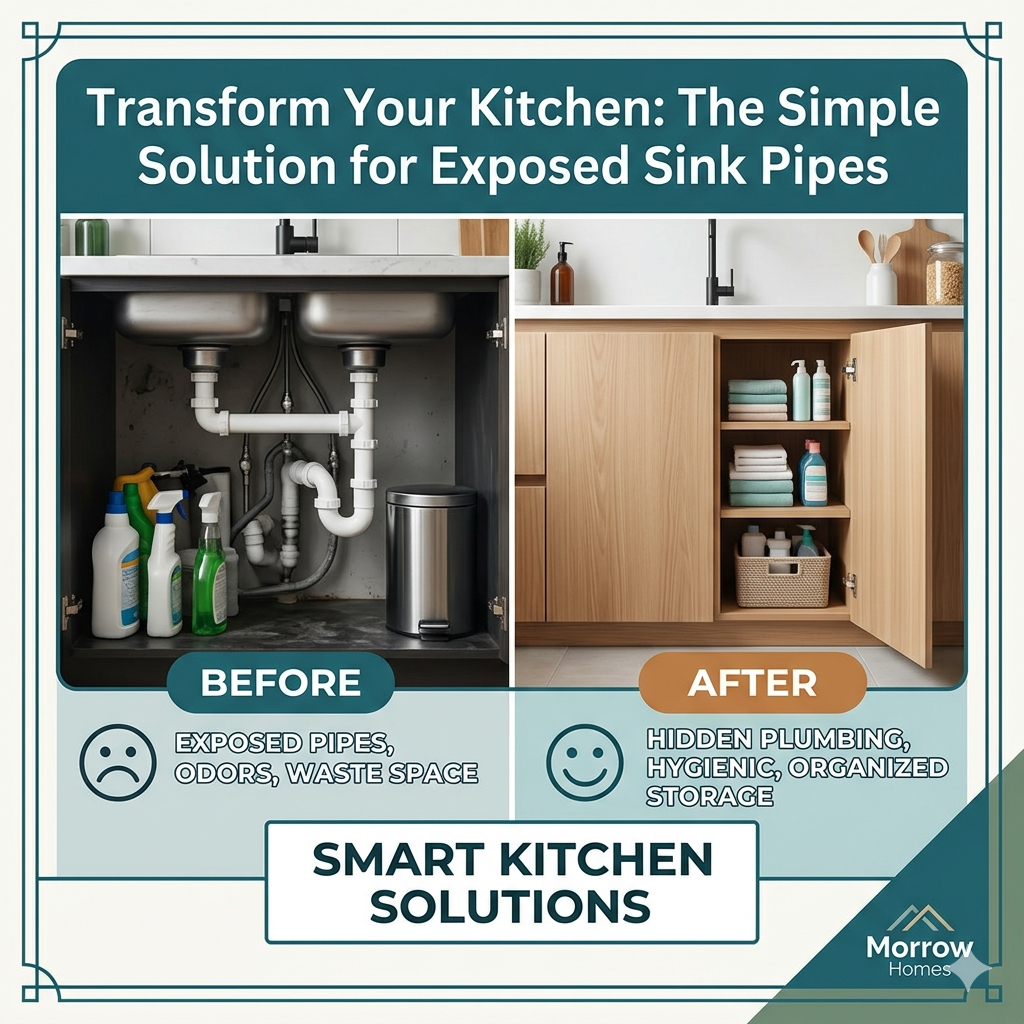
The kitchen is often referred to as the heart of the home. It is where meals are prepared, memories are made, and family life unfolds. However, even the most beautifully designed kitchen can be let down by small, overlooked details. One of the most common eyesores in a kitchen is the exposed plumbing under the sink. While it might seem like a minor aesthetic issue, leaving your sink pipes open can lead to hygiene problems, wasted space, and an overall cluttered look.
In a recent video by Morrow Homes, a simple yet effective tip was shared to elevate both the functionality and beauty of your kitchen. Here is how you can transform that messy under-sink area into an organized, hygienic, and stylish space.
The Hidden Problems of Exposed Pipes
Most homeowners ignore the area under the sink until a leak occurs. However, keeping this area open and the pipes exposed presents several challenges:
-
Unpleasant Odors: When sink pipes are left completely open to the kitchen environment, trapped food particles or stagnant water in the U-bend can emit foul smells . These odors can permeate your kitchen, making it an unpleasant place to cook and dine.
-
Hygiene and Bacteria: Exposed damp pipes are a breeding ground for bacteria and mold. This can compromise the overall cleanliness of your kitchen, which is the last thing you want in a space where food is handled.
-
Wasted Storage Space: The area under the sink is often “dead space.” Because of the irregular shape of the pipes, it’s hard to store items neatly, leading to a pile of cleaning supplies shoved into a dark corner.
The Simple Solution: Under-Sink Cabinets
The experts at Morrow Homes suggest a straightforward architectural fix: installing a dedicated cabinet to conceal the plumbing . By enclosing the pipes, you instantly create a cleaner look, but the benefits go beyond just aesthetics.
1. Removable Shelving for Easy Maintenance
One of the biggest concerns people have with boxing in pipes is access for repairs. The video recommends using removable shelves within the cabinet . This design choice ensures that if you ever have a leak or need to perform maintenance on the plumbing, you can simply slide the shelves out and reach the pipes without any hassle.
2. Maximizing Storage Potential
Once the pipes are concealed within a cabinet, that “dead space” becomes a functional storage unit. You can use this area to neatly organize:
-
Cleaning Supplies: Sprays, sponges, and detergents can be tucked away but kept within reach.
-
Heavy Items: The base of the cabinet is perfect for storing heavier kitchen essentials that you don’t use every day.
3. Improving Kitchen Hygiene
By enclosing the area, you create a barrier that helps contain odors and prevents dust and grime from accumulating directly on the pipes. It makes the floor area under the sink much easier to sweep and mop, contributing to a more sanitary kitchen environment .
Enhancing Beauty Through Small Changes
The takeaway from this tip is that you don’t need a massive, expensive renovation to make your kitchen feel “designer.” Sometimes, it’s about the small, smart changes that improve the flow and cleanliness of your home. By hiding your sink pipes behind a well-crafted cabinet, you increase the visual appeal of the room and ensure that every square inch of your kitchen is working for you
Conclusion
A clean, organized kitchen is a happy kitchen. Taking the time to address the clutter and hygiene issues caused by exposed pipes is a worthy investment for any homeowner. Whether you are building a new home or looking to upgrade your current space, consider the under-sink cabinet as an essential feature.
For more expert home design and architectural tips, you can follow Morrow Homes for creative solutions that make modern living easier and more beautiful.
Watch the full tip here: Morrow Homes – Kitchen Design Tip