Maximizing Your Home’s Potential: Creative Ways to Use the Space Under Your Stairs

In modern home design, every square inch counts. Whether you are building a new house in Kerala or renovating an older one, one of the most frequently overlooked areas is the under-stair space. Often relegated to being a dark corner for dusty suitcases or old newspapers, this small nook actually holds immense potential to enhance both the functionality and the aesthetic appeal of your home.

As highlighted in a recent guide by Morrow Homes, transforming this “dead space” into a purposeful zone can be a game-changer. Here is a deep dive into how you can reclaim that area and turn it into one of the most useful spots in your house.


1. The Stylish Powder Room

One of the most popular and value-adding ways to utilize the space under a staircase is by installing a powder room or a guest toilet. This is particularly useful in Kerala homes where hospitality is key, providing guests with a private space without them needing to enter the more personal areas of the house.

However, building a bathroom in such a tight spot requires precision. According to the experts at Morrow Homes, there are two non-negotiable measurements you must keep in mind:

  • Headroom Clearance: To ensure the space is comfortable and doesn’t feel claustrophobic, you should have a minimum height of 2030 mm (roughly 6.6 feet) inside the room. This allows an average adult to stand upright without fear of hitting the sloping ceiling.

  • Floor Space: You need to maintain at least 610 mm (about 2 feet) of clear space in front of the toilet fixture. This ensures there is enough legroom and space to move around comfortably.

Pro Tip: Use light-colored tiles, a large mirror, and clever LED lighting to make a small under-stair powder room feel much larger than it actually is.


2. The Compact Home Office (Work-from-Home Nook)

If a bathroom isn’t a priority for your layout, consider turning the area into a mini work station. With the rise of remote work and digital learning, having a dedicated “cloffice” (closet-office) is a huge advantage.

The slope of the stairs naturally creates a cozy, focused environment. You can install a floating desk to keep the floor clear, add some floating shelves for books, and ensure there’s a power outlet nearby for your laptop and lamp. It’s the perfect way to create a professional boundary within a shared living area.


3. A Smart Laundry Hub

Another practical solution is converting the space into a laundry or utility area. In many modern Kerala homes, homeowners prefer to keep the washing machine and cleaning supplies tucked away from the main kitchen or bathroom areas.

By fitting your washing machine under the stairs, you save valuable floor space elsewhere. You can even install custom cabinetry to hide the machine behind doors when it’s not in use, along with pull-out drawers for detergents, iron boxes, and laundry baskets.


4. Bespoke Storage and Display

If you prefer to keep things simple, custom-built storage is the way to go. Instead of a single dark cupboard, think about:

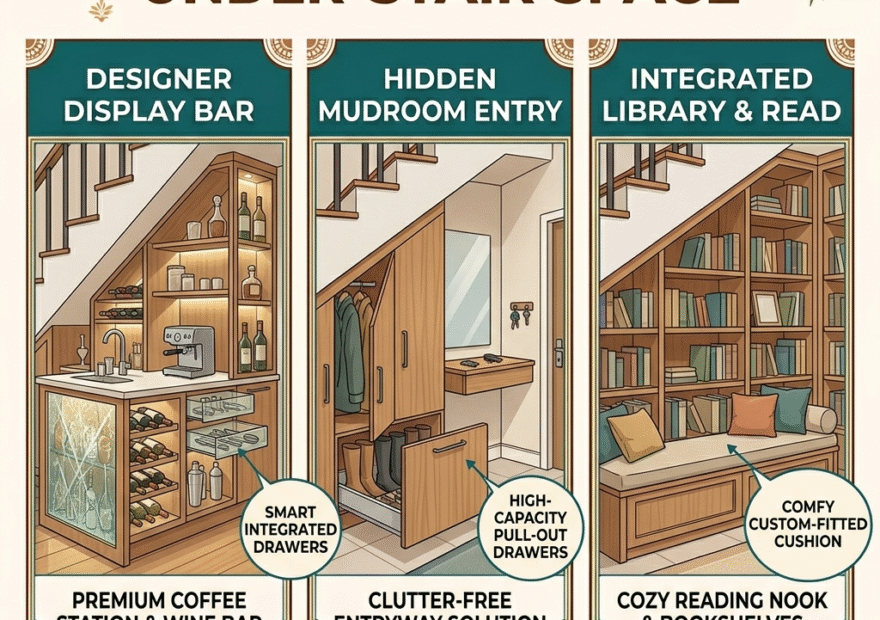
  • Pull-out Drawers: These are excellent for shoe storage, keeping your entryway organized and clutter-free.

  • Open Bookshelves: If your staircase is in the living room, turning the underside into a library adds a sophisticated, intellectual vibe to the decor.

  • Wine Rack or Coffee Bar: For those who love to entertain, this niche can be transformed into a stylish bar or a dedicated coffee station.


Why Small Details Matter

The key takeaway from the Morrow Homes guide is that efficiency is the soul of modern architecture. Whether you are working with architects in Trivandrum or planning a DIY renovation, focusing on these “hidden” spaces allows you to live more comfortably without necessarily increasing the footprint of your home.

By paying attention to technical details like height clearances and floor spacing, you ensure that your creative solution is not just beautiful, but also practical for daily use.

Looking for more home construction tips in Kerala? Small changes can lead to big transformations. Don’t let your under-stair space go to waste—turn it into a feature that adds character and value to your home today!

For more expert advice on home building and design, check out the full video by Morrow Homes here.

Creating the Perfect Ergonomic Home Office: Tips for a Pain-Free Workspace

In the modern professional landscape, the home office has transitioned from a temporary setup to a permanent fixture in our lives. However, many of us overlook the physical toll that a poorly designed workspace can take on our bodies. Incorrect posture and improper furniture alignment are leading causes of chronic neck pain, backaches, and general physical fatigue.

To help you stay productive and healthy, here is a comprehensive guide to setting up an ergonomic home office that prioritizes your well-being.

1. Optimize Your Desk Space

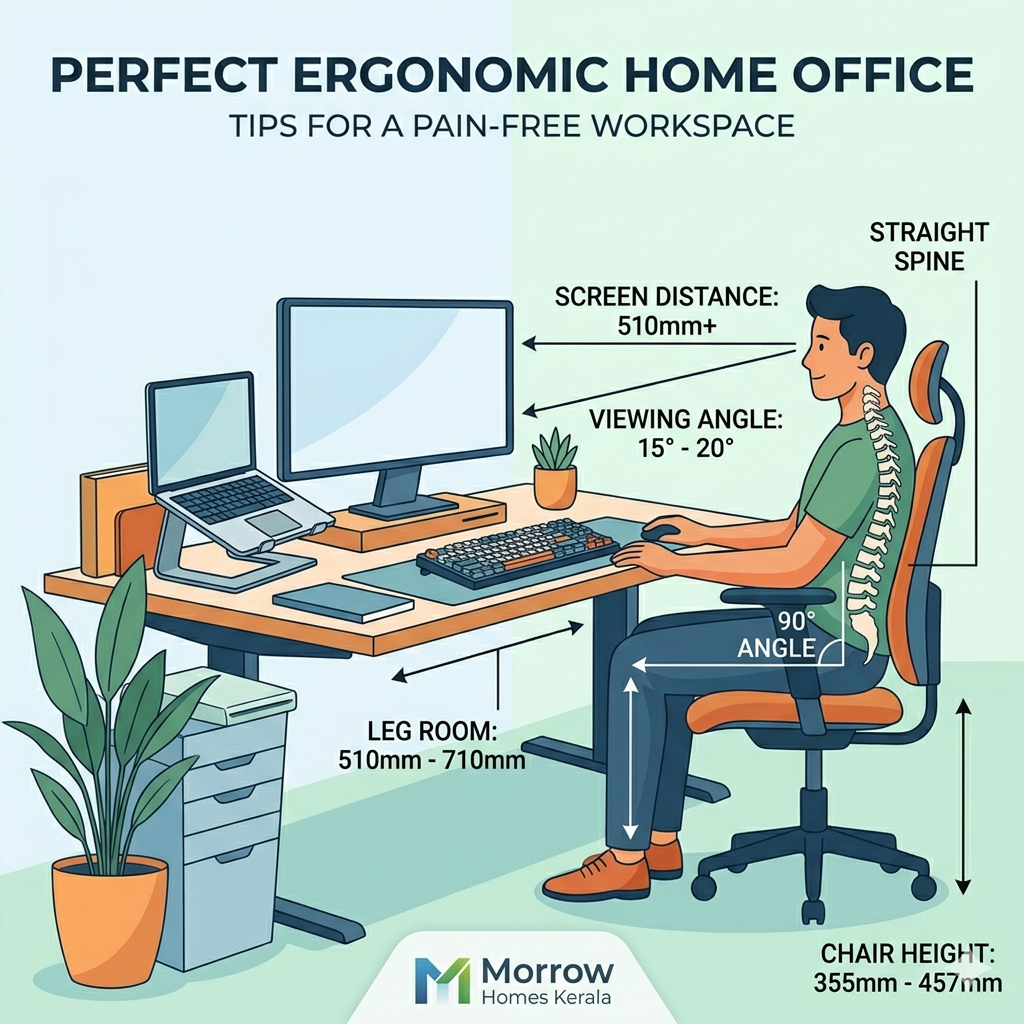
The foundation of a good workstation is having enough room to move. One of the most common mistakes is a cramped desk area that restricts leg movement. To ensure comfort, there should be a clear space of 510 mm to 710 mm beneath your desk.This allows you to stretch and position your legs naturally, preventing stiffness during long hours of work.

2. Perfect Your Seating Height

Your chair is perhaps the most critical element of your setup. A chair that is too high or too low can put undue pressure on your spine and thighs. Ideally, your chair height should be adjusted between 355 mm and 457 mm. When sitting, pay close attention to your body’s angles: your hips and knees should remain at a 90-degree angle. This posture supports the natural curve of your spine and promotes better circulation.

3. Maintain Spinal Alignment

It is easy to find yourself slouching as the day progresses, but keeping your spine straight is essential for long-term health. Avoid leaning forward or hunching over your laptop. Sitting upright not only prevents back pain but also improves your focus and breathing.

4. Screen Placement and Eye Health

Eye strain is a frequent complaint for those working digitally. To protect your vision, the distance between your eyes and the screen should be approximately one arm’s length, or at least 510 mm.

Furthermore, the angle at which you view your monitor matters. Positioning your screen so that your viewing angle is between 15 to 20 degrees is considered the most suitable for reducing neck strain.  This ensures you aren’t constantly looking too far up or down, which can lead to cervical discomfort.

Conclusion

Investing a little time into the ergonomics of your home office can yield massive returns in terms of health and productivity. By following these specific measurements and posture tips, you can transform your workspace into a sanctuary of efficiency rather than a source of physical stress.

Remember, a healthy body is the most important tool in your professional toolkit. Start making these adjustments today to ensure a more comfortable and sustainable work-from-home experience.

Watch More: https://youtube.com/shorts/hHjqDxvnwWI?si=h2yOlizAfWlikmyh

Essential Measurements for a Stunning and Functional Living Room

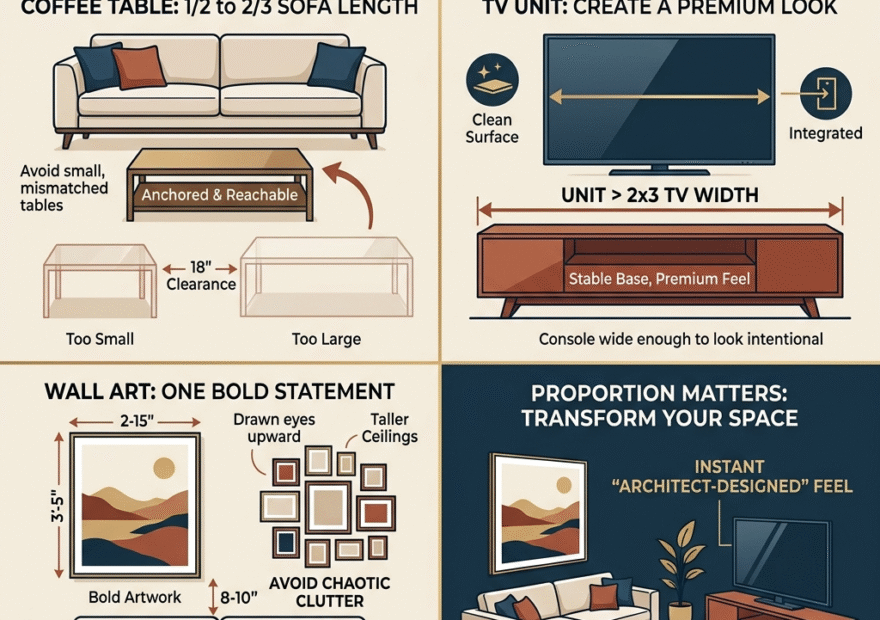
The living room is the heart of every home—a space where families gather, guests are entertained, and memories are made. However, a common mistake in home design is focusing solely on aesthetics while overlooking the science of ergonomics. Even the most expensive furniture can feel awkward if the spacing is off. To help you create a space that is both beautiful and comfortable, here are the essential measurements and layout tips for a perfect living room.

1. The Ideal Distance Between the Sofa and TV

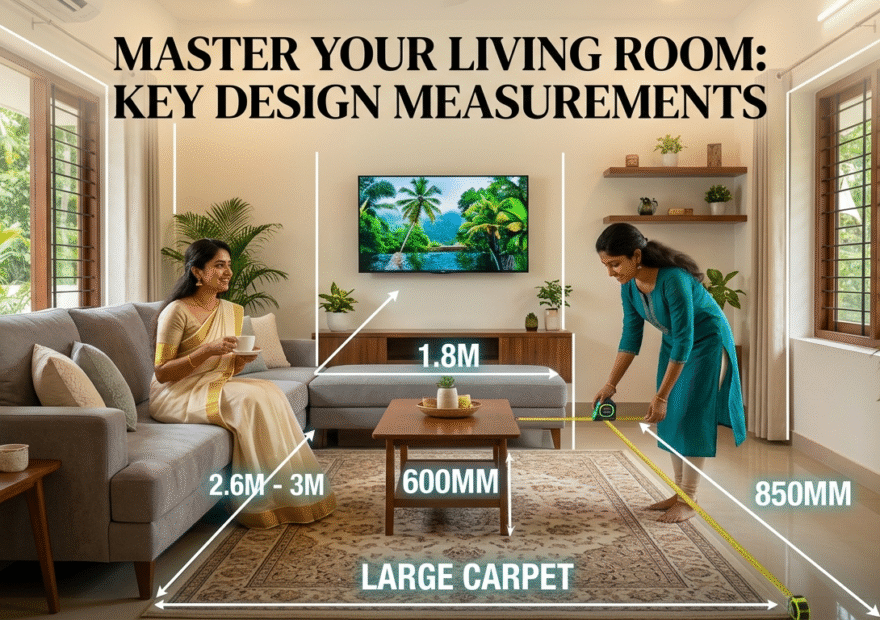
One of the most important aspects of living room comfort is the viewing distance. If the sofa is too close, it can cause eye strain; if it’s too far, the cinematic experience is lost. A professional standard to follow is maintaining a distance of approximately 1.8 meters from the TV unit to the sofa. This provides a balanced field of vision and ensures that the screen remains the focal point without overwhelming the seating area [00:00].

2. Ensuring Seamless Traffic Flow

A well-designed room should never feel like an obstacle course. Whether you are carrying a tray of tea or simply moving through the house, “clearance” is key. It is highly recommended to leave at least 850 millimeters of walking space around furniture to ensure smooth movement within the room .

Additionally, pay close attention to the gap between your sofa and the coffee table. To prevent bumped shins while still keeping your drink within reach, aim for a minimum of 600 millimeters of space between the two .

3. Creating the Perfect Conversation Circle

Socializing is the primary function of a living room. If seats are spread too far apart, people end up shouting; too close, and it feels cramped. For a natural and comfortable conversation flow, position your primary seating within a range of 2.6 to 3 meters . This distance allows for intimate communication while maintaining a sense of personal space.

4. The Secret to Choosing the Right Carpet

The rug you choose can either “anchor” the room or make it look disjointed. A common design error is using a carpet that is too small for the space. Tiny rugs can make a large room look narrow and cluttered.

Instead, opt for a larger rug that allows at least the front legs of the sofa to rest upon it. Using a generous carpet that accommodates the furniture legs creates an illusion of a larger, more grand space, adding a touch of elegance and cohesion to the entire interior.

Conclusion

Designing a living room is about finding the perfect harmony between style and utility. By following these precise measurements—from the 1.8-meter TV distance to the 850mm walking paths—you can transform your home into a professional-grade living space. Remember, a room that is measured correctly doesn’t just look better; it feels better to live in.

For more expert home design and architectural tips, stay tuned for our latest updates and guides!

Watch the video: https://youtube.com/shorts/gXa3dXdW5k4?si=DxoLTVatGm_CIw2D

Master the Art of Bedroom Design: Key Measurements for a Perfect Sanctuary

Creating a bedroom that is both aesthetically pleasing and highly functional requires more than just picking out the right furniture. True comfort lies in the details—specifically, the measurements. Whether you are renovating your home or designing a new one, following standard spatial guidelines ensures your room feels balanced and spacious.

Based on expert advice from Morrow Homes, here is a comprehensive guide to the essential measurements you need to transform your bedroom into a comfortable retreat.


1. Finding the Ideal Bed Height

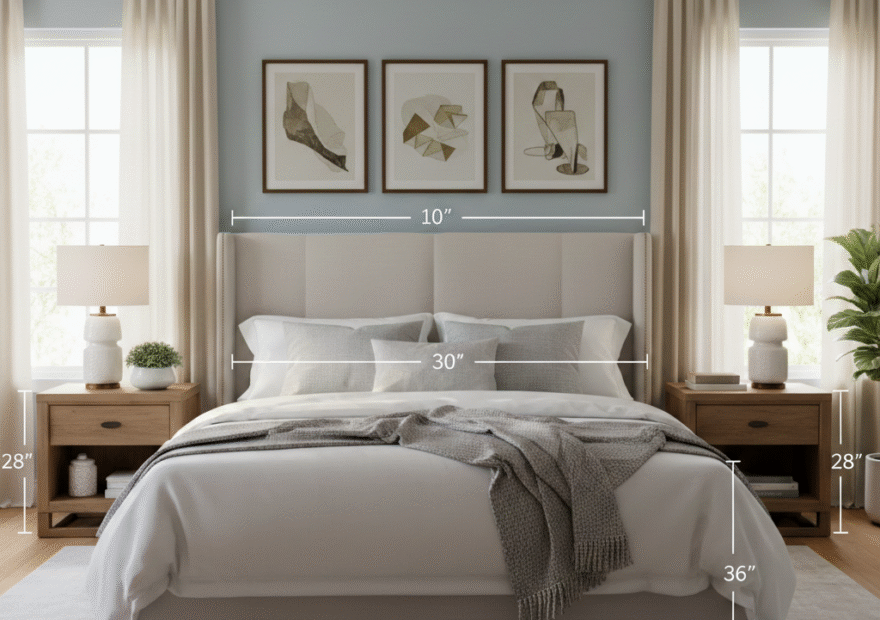
The centerpiece of any bedroom is, of course, the bed. To ensure ease of use, a standard bed should have a height of approximately 25 inches . This height allows most people to sit comfortably on the edge of the bed with their feet flat on the floor, making it easier to get in and out of bed every day.

2. Prioritizing Traffic Flow

One of the most common mistakes in interior design is overcrowding the room. To walk smoothly around your bed without feeling cramped, you should leave at least 36 inches of clearance space on all sides . This “breathing room” is essential for a stress-free environment and allows for easy access to wardrobes or balconies.

3. The Perfect Headboard and Side Table

Your headboard serves as both a functional support and a visual focal point. For a look that combines beauty with comfort, aim for a headboard height of about 30 inches above the mattress .

To complement the bed, your side tables should be at a height that makes reaching for a lamp or a book effortless. A height of 28 inches for side tables is generally considered the “sweet spot” for ergonomic comfort.

4. Enhancing Windows with Curtain Placement

If you want your bedroom to look larger and more elegant, pay close attention to your curtain rods. Instead of placing the rod directly on the window frame, install it approximately 5 inches above the frame. This simple trick draws the eye upward, giving the illusion of taller windows and higher ceilings, which adds a touch of grandeur to the space.

5. Balancing Wall Decor

Decorating the wall behind your bed adds personality, but placement is key to maintaining a “balanced look.” If you are hanging paintings or wall art, ensure there is a gap of about 10 inches above the headboard before the artwork begins . This prevents the wall from looking cluttered and ensures the proportions of the room remain harmonious.


Conclusion

Designing a bedroom is a blend of art and science. By sticking to these specific measurements—from the 36-inch walking space to the 5-inch elevation of your curtain rods—you can create a space that feels professionally designed and perfectly tailored to your needs.

For more expert tips on home transformation and interior design in Kerala, stay tuned to Morrow Homes.

Watch the full tip here: Morrow Tip – Bedroom Design

Understanding Foundation Footings: A Guide to Building a Stable Home

When constructing a building, the foundation is arguably the most critical component. It ensures that the weight of the entire structure is safely distributed to the ground. Choosing the right type of footing depends on the soil quality, the type of structure, and the terrain.

In this guide, we break down the different types of footings as explained by Morrow Homes to help you understand which one suits your construction needs.

1. Wall Footing

Wall footings are used to distribute the load from the walls evenly to the soil below. This type of footing is essential for providing overall stability to the building and preventing uneven settlement

2. Spread Footing

As the name suggests, this footing “spreads” the load over a wider area. By increasing the width of the footing, the weight of the building is distributed more effectively. This is particularly helpful in preventing the building from leaning or sinking on one side

3. Raft Footing (Mat Foundation)

Raft footings are the preferred choice in areas where the soil has low bearing capacity (weak soil). It acts like a “raft” that allows the entire weight of the building to be distributed uniformly across the whole footprint of the foundation

4. Pile Footing

When the surface soil is too weak to support the weight of a structure, engineers look deeper. Pile footings involve driving columns deep into the earth to reach a stronger soil layer or rock, transferring the load to a more stable depth

5. Sloped Footing

Sloped footings are specifically designed for construction on inclined or sloped surfaces. They help maintain structural integrity while adapting to the natural gradient of the land

6. Stepped Footing

Stepped footings are primarily used when building on uneven or hilly terrain. Instead of a continuous flat base, the foundation is built in “steps” to follow the ground’s elevation changes while keeping the structure level.


Conclusion The longevity of your home depends on the ground it stands on. Whether you are building on a flat plot or a hillside, choosing the right footing is the first step toward a safe and durable home.

Ready to transform your exterior into a masterpiece?

Exterior Elegance: Transforming Facades into Statements

In the world of architecture, the exterior of a building is more than just a protective shell—it’s the first chapter of your home’s story. At Morrow Homes, we believe that exceptional exterior design goes beyond aesthetics; it’s about creating a harmonious dialogue between structure, environment, and individual style.

Modern Exterior Design: Beyond Conventional Boundaries

Today’s exterior design transcends traditional limitations. We’re seeing a fascinating blend of materials, textures, and innovative architectural approaches that challenge conventional thinking. From sleek minimalist designs to organic, nature-inspired facades, exterior architecture has become a canvas of personal expression.

Key Trends in Exterior Design:

  1. Sustainable Materials Eco-friendly materials are no longer a trend—they’re a necessity. Recycled wood, sustainable composites, and energy-efficient cladding are revolutionizing how we think about building exteriors.
  2. Seamless Indoor-Outdoor Integration Modern exteriors are breaking down barriers between interior and exterior spaces. Large glass panels, sliding doors, and strategic landscaping create fluid, interconnected environments.
  3. Texture and Contrast Mixing materials like wood, stone, metal, and glass creates visual depth and architectural interest. The interplay of rough and smooth textures adds complexity to your home’s exterior.
  4. Minimalist Color Palettes Neutral tones with strategic bold accents are dominating exterior color schemes. Think sophisticated grays, warm whites, and occasional dramatic black or deep green elements.
  5. Smart Technology Integration Exterior design now incorporates smart home technologies—automated lighting, solar panels, and adaptive shading systems that enhance both functionality and aesthetic appeal.

Challenges in Exterior Design:

  • Balancing aesthetics with functionality
  • Adapting to local climate and environmental conditions
  • Maintaining architectural integrity while incorporating modern technologies
  • Creating a unique identity that reflects the homeowner’s personality

The Morrow Homes Approach:

Our exterior design philosophy is rooted in:

  • Personalized consultation
  • Innovative design solutions
  • Sustainable practices
  • Attention to contextual details
  • Seamless integration of client vision

Practical Tips for Exterior Transformation:

  1. Consider your environment and local architectural context
  2. Prioritize quality materials over temporary trends
  3. Think about long-term maintenance
  4. Balance aesthetic desires with functional requirements
  5. Invest in professional design consultation
Conclusion

Your home’s exterior is more than a facade—it’s a statement, a personal signature that speaks volumes before anyone steps inside. At Morrow Homes, we don’t just design exteriors; we craft experiences, memories, and lifetime impressions.