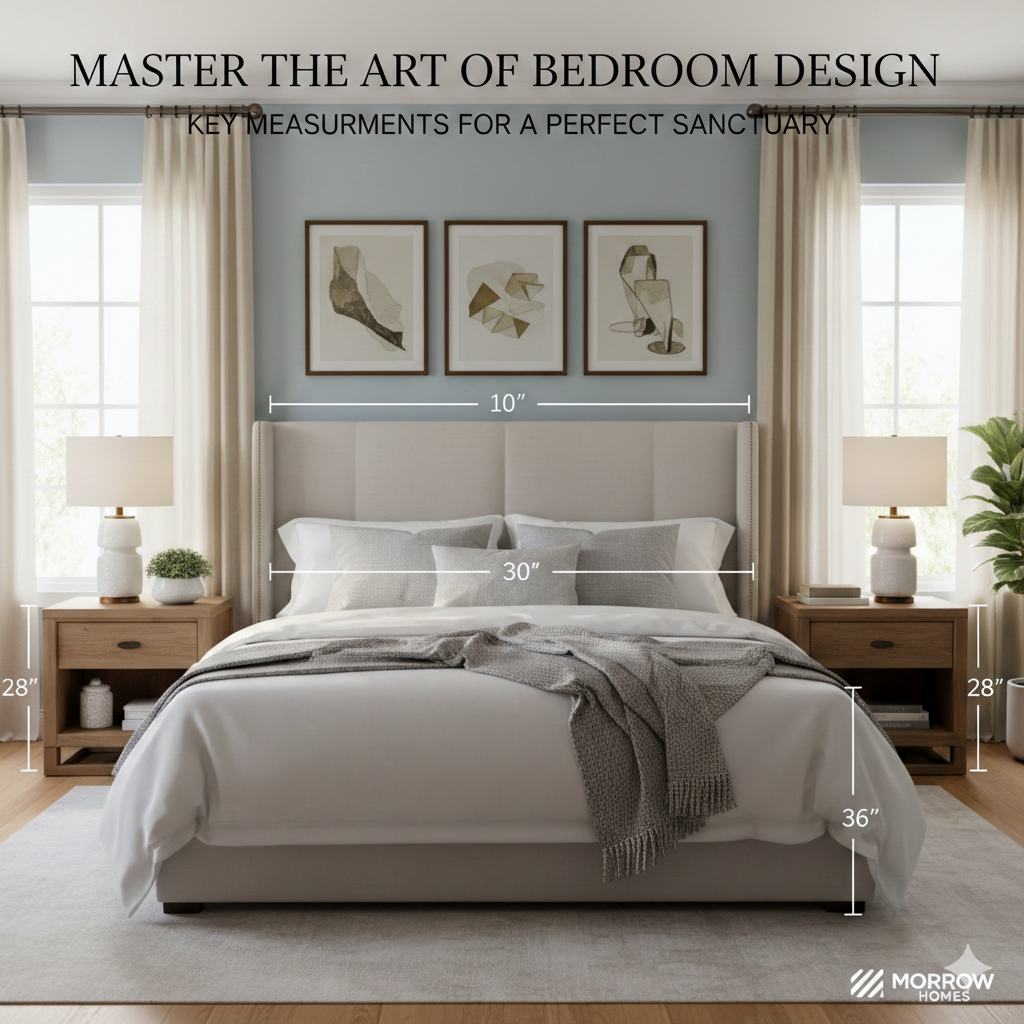
Master the Art of Bedroom Design: Key Measurements for a Perfect Sanctuary

Creating a bedroom that is both aesthetically pleasing and highly functional requires more than just picking out the right furniture. True comfort lies in the details—specifically, the measurements. Whether you are renovating your home or designing a new one, following standard spatial guidelines ensures your room feels balanced and spacious.

Based on expert advice from Morrow Homes, here is a comprehensive guide to the essential measurements you need to transform your bedroom into a comfortable retreat.


1. Finding the Ideal Bed Height

The centerpiece of any bedroom is, of course, the bed. To ensure ease of use, a standard bed should have a height of approximately 25 inches . This height allows most people to sit comfortably on the edge of the bed with their feet flat on the floor, making it easier to get in and out of bed every day.

2. Prioritizing Traffic Flow

One of the most common mistakes in interior design is overcrowding the room. To walk smoothly around your bed without feeling cramped, you should leave at least 36 inches of clearance space on all sides . This “breathing room” is essential for a stress-free environment and allows for easy access to wardrobes or balconies.

3. The Perfect Headboard and Side Table

Your headboard serves as both a functional support and a visual focal point. For a look that combines beauty with comfort, aim for a headboard height of about 30 inches above the mattress .

To complement the bed, your side tables should be at a height that makes reaching for a lamp or a book effortless. A height of 28 inches for side tables is generally considered the “sweet spot” for ergonomic comfort.

4. Enhancing Windows with Curtain Placement

If you want your bedroom to look larger and more elegant, pay close attention to your curtain rods. Instead of placing the rod directly on the window frame, install it approximately 5 inches above the frame. This simple trick draws the eye upward, giving the illusion of taller windows and higher ceilings, which adds a touch of grandeur to the space.

5. Balancing Wall Decor

Decorating the wall behind your bed adds personality, but placement is key to maintaining a “balanced look.” If you are hanging paintings or wall art, ensure there is a gap of about 10 inches above the headboard before the artwork begins . This prevents the wall from looking cluttered and ensures the proportions of the room remain harmonious.


Conclusion

Designing a bedroom is a blend of art and science. By sticking to these specific measurements—from the 36-inch walking space to the 5-inch elevation of your curtain rods—you can create a space that feels professionally designed and perfectly tailored to your needs.

For more expert tips on home transformation and interior design in Kerala, stay tuned to Morrow Homes.

Watch the full tip here: Morrow Tip – Bedroom Design
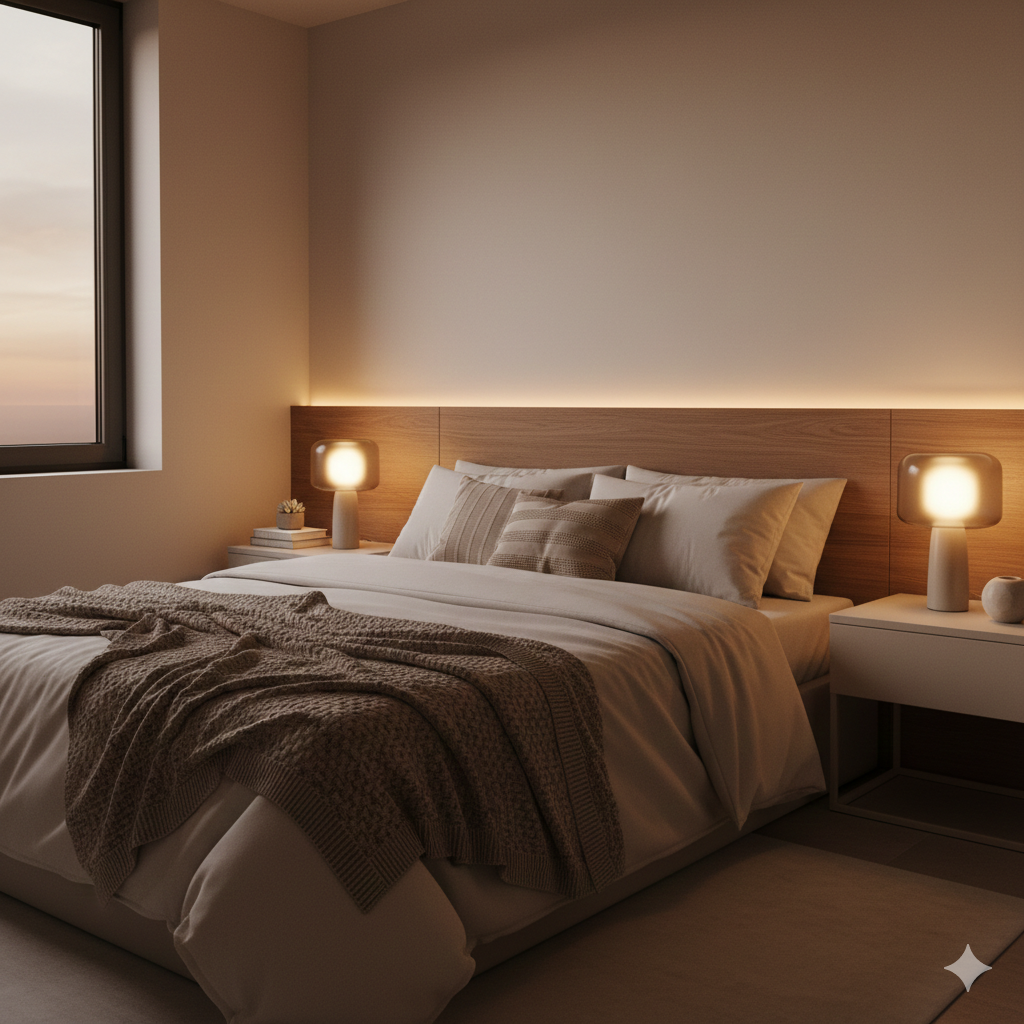
Illuminating Your Sanctuary: Why the Right Bedroom Lighting Matters

Your bedroom is more than just a place to sleep; it is your personal sanctuary, a space designed for relaxation, reflection, and rejuvenation. While we often spend hours picking out the perfect mattress or the softest linens, one of the most critical elements of bedroom design is frequently overlooked: lighting.

In a recent expert tip from Morrow Homes, a leading architectural firm in Kerala, the importance of Color Temperature (measured in Kelvin) was highlighted as a deciding factor in sleep quality and mental well-being. If you’ve been feeling restless or finding it hard to “switch off” at night, the culprit might be right above your head.

The Science of Light and Sleep

We  points out a common mistake many homeowners make: using high-intensity lights ranging from 4000K to 5000K in the bedroom These temperatures produce a “cool white” or “daylight” effect. While these are excellent for offices, kitchens, or workspaces where alertness is required, they are detrimental to a bedroom environment.

Cooler blue-toned lights suppress the production of melatonin, the hormone responsible for regulating your sleep-wake cycle. When your brain is exposed to 5000K lighting late at night, it receives a signal that it is still daytime, making it significantly harder to fall into a deep, restful slumber.

The Golden Rule: 2700K to 3000K

To transform your bedroom into a true place of rest, Morrow Homes recommends choosing lights with a power of 2700K to 3000K . This range is often referred to as “Warm White.”

Why does this work?

  • Mimics Nature: This temperature closely resembles the soft, natural light of a setting sun . As the sun sets, the light becomes warmer, signaling to our biological clocks that it is time to wind down.

  • Mental Relaxation: Warm light provides a soft glow that helps soothe the mind and relax the body after a long day.

  • Aesthetic Appeal: Beyond health benefits, warm lighting enhances the textures of your furniture and decor, creating a cozy, high-end “boutique hotel” feel.

Creating a Layered Lighting Scheme

Following the advice from the experts at Morrow Homes, here are a few ways to implement these tips:

  1. Ditch the Tube Lights: Standard bright white tube lights are often too harsh. Swap them for warm LED recessed lights or stylish pendants.

  2. Use Bedside Lamps: Instead of one central bright light, use bedside lamps with 2700K bulbs for reading. This keeps the light levels low and focused.

  3. Accent Lighting: Use warm strips behind headboards or under wardrobes to create a soft ambient glow that doesn’t strain the eyes.

Conclusion

Small changes in your home’s architecture and interior design can lead to massive improvements in your quality of life. By simply switching your bedroom bulbs to a warmer temperature, you aren’t just changing a light; you’re investing in better health and better sleep.

For more expert architectural tips and home transformation ideas, be sure to follow Morrow Homes and stay tuned for more insights on building your dream home.

Watch the full tip here: https://www.youtube.com/watch?v=ne-LAnWJ4Dg

Understanding Foundation Footings: A Guide to Building a Stable Home

When constructing a building, the foundation is arguably the most critical component. It ensures that the weight of the entire structure is safely distributed to the ground. Choosing the right type of footing depends on the soil quality, the type of structure, and the terrain.

In this guide, we break down the different types of footings as explained by Morrow Homes to help you understand which one suits your construction needs.

1. Wall Footing

Wall footings are used to distribute the load from the walls evenly to the soil below. This type of footing is essential for providing overall stability to the building and preventing uneven settlement

2. Spread Footing

As the name suggests, this footing “spreads” the load over a wider area. By increasing the width of the footing, the weight of the building is distributed more effectively. This is particularly helpful in preventing the building from leaning or sinking on one side

3. Raft Footing (Mat Foundation)

Raft footings are the preferred choice in areas where the soil has low bearing capacity (weak soil). It acts like a “raft” that allows the entire weight of the building to be distributed uniformly across the whole footprint of the foundation

4. Pile Footing

When the surface soil is too weak to support the weight of a structure, engineers look deeper. Pile footings involve driving columns deep into the earth to reach a stronger soil layer or rock, transferring the load to a more stable depth

5. Sloped Footing

Sloped footings are specifically designed for construction on inclined or sloped surfaces. They help maintain structural integrity while adapting to the natural gradient of the land

6. Stepped Footing

Stepped footings are primarily used when building on uneven or hilly terrain. Instead of a continuous flat base, the foundation is built in “steps” to follow the ground’s elevation changes while keeping the structure level.


Conclusion The longevity of your home depends on the ground it stands on. Whether you are building on a flat plot or a hillside, choosing the right footing is the first step toward a safe and durable home.

Ready to transform your exterior into a masterpiece?

Exterior Elegance: Transforming Facades into Statements

In the world of architecture, the exterior of a building is more than just a protective shell—it’s the first chapter of your home’s story. At Morrow Homes, we believe that exceptional exterior design goes beyond aesthetics; it’s about creating a harmonious dialogue between structure, environment, and individual style.

Modern Exterior Design: Beyond Conventional Boundaries

Today’s exterior design transcends traditional limitations. We’re seeing a fascinating blend of materials, textures, and innovative architectural approaches that challenge conventional thinking. From sleek minimalist designs to organic, nature-inspired facades, exterior architecture has become a canvas of personal expression.

Key Trends in Exterior Design:

  1. Sustainable Materials Eco-friendly materials are no longer a trend—they’re a necessity. Recycled wood, sustainable composites, and energy-efficient cladding are revolutionizing how we think about building exteriors.
  2. Seamless Indoor-Outdoor Integration Modern exteriors are breaking down barriers between interior and exterior spaces. Large glass panels, sliding doors, and strategic landscaping create fluid, interconnected environments.
  3. Texture and Contrast Mixing materials like wood, stone, metal, and glass creates visual depth and architectural interest. The interplay of rough and smooth textures adds complexity to your home’s exterior.
  4. Minimalist Color Palettes Neutral tones with strategic bold accents are dominating exterior color schemes. Think sophisticated grays, warm whites, and occasional dramatic black or deep green elements.
  5. Smart Technology Integration Exterior design now incorporates smart home technologies—automated lighting, solar panels, and adaptive shading systems that enhance both functionality and aesthetic appeal.

Challenges in Exterior Design:

  • Balancing aesthetics with functionality
  • Adapting to local climate and environmental conditions
  • Maintaining architectural integrity while incorporating modern technologies
  • Creating a unique identity that reflects the homeowner’s personality

The Morrow Homes Approach:

Our exterior design philosophy is rooted in:

  • Personalized consultation
  • Innovative design solutions
  • Sustainable practices
  • Attention to contextual details
  • Seamless integration of client vision

Practical Tips for Exterior Transformation:

  1. Consider your environment and local architectural context
  2. Prioritize quality materials over temporary trends
  3. Think about long-term maintenance
  4. Balance aesthetic desires with functional requirements
  5. Invest in professional design consultation
Conclusion

Your home’s exterior is more than a facade—it’s a statement, a personal signature that speaks volumes before anyone steps inside. At Morrow Homes, we don’t just design exteriors; we craft experiences, memories, and lifetime impressions.