

Designing a kitchen is much more than choosing the right color palette or selecting high-end appliances. At its core, kitchen design is about functionality, efficiency, and—most importantly—ergonomics. If you are building a new home or planning a renovation, the measurements you choose for your cabinets and countertops will define how your kitchen feels to use every single day.
Whether you are a seasoned home chef or someone who enjoys a casual weekend bake, small adjustments in your kitchen layout can make a world of difference. Drawing from professional architectural standards, let’s break down the essential dimensions that create a comfortable, productive kitchen space.
The Foundation: Countertop Heights and Depths
The most critical aspect of any kitchen is the countertop. It is your primary workspace, where prep work, cooking, and plating happen.
-
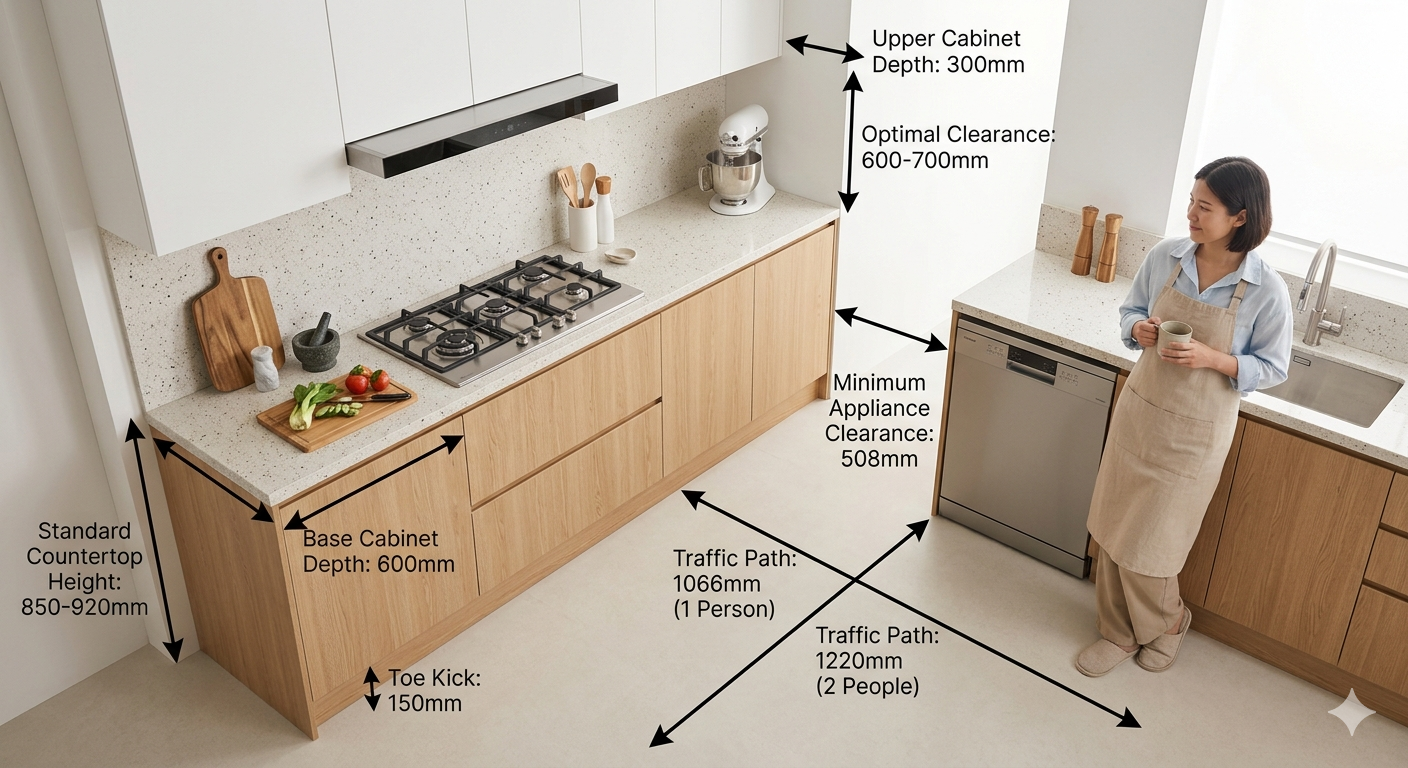
Countertop Height: To avoid back strain, your countertops should be set at an ergonomic height. The industry standard generally ranges between 850mm and 920mm. This height ensures that you are neither hunching over nor reaching too high while chopping vegetables or stirring a pot.
-
Cabinet Depth: The standard depth for a bottom cabinet is 600mm. This provides ample surface area for appliances and prep work while maintaining a reach that is comfortable for the average person.
-
Top Cabinet Proportions: For your overhead cabinets, a common design rule is to keep the depth at roughly half of your bottom cabinets—approximately 300mm. This ensures that the upper cabinets don’t feel intrusive or obstruct your view of the workspace below.
Mastering the Flow: Clearance and Spacing
A common mistake in kitchen design is failing to account for how people move through the space. A kitchen that looks beautiful on paper can be frustrating if it doesn’t allow for natural movement.
-
The Toe Kick: Don’t forget the base! It is essential to provide a 150mm toe kick space at the bottom of your lower cabinets. This allows your feet to fit comfortably under the counter while you stand, preventing you from having to lean forward awkwardly.
-
Spacing Between Cabinets: The gap between your base cabinets and your wall-mounted upper cabinets should be between 600mm and 700mm. This provides enough clearance to use countertop appliances (like mixers or coffee machines) without the upper cabinets feeling like they are “crowding” your workspace.
-
Traffic Flow: How much space do you actually need? For a single person working in the kitchen, 1066mm of space is generally recommended per person to move freely. If your kitchen layout often involves two people working simultaneously, aim for at least 1220mm of clearance to ensure you aren’t bumping into each other.
-
Walls and Breakfast Counters: If you have a wall or a breakfast counter, ensure a clearance of 1117mm. This prevents the area from feeling tight and allows for easy movement in and out of the kitchen zone.
Appliance Ergonomics: The Dishwasher Zone
Appliances are often integrated into our cabinetry, but they require their own specific spatial requirements to be truly useful. Take the dishwasher, for example. You aren’t just measuring the machine itself; you are measuring the space required to interact with it.
It is highly recommended to provide at least 508mm of open floor space in front of the dishwasher. This allows you to stand comfortably while loading or unloading dishes, maneuvering around the door without feeling trapped.
Why Measurements Matter
Kitchen design is essentially the science of human movement. By adhering to these standard measurements, you are not just building a set of cupboards; you are investing in a space that respects your posture, reduces fatigue, and streamlines your workflow.
If you are planning your dream kitchen, take the time to map out these dimensions before any construction begins. A well-measured kitchen is a joy to work in, turning the mundane task of cooking into a seamless, pleasurable experience.
For more architectural tips and professional advice on home construction, follow professional resources like Morrow Homes for insights into building spaces that are as functional as they are beautiful.
Watch Now: https://youtube.com/shorts/sgRV5BFEvtQ?feature=share