

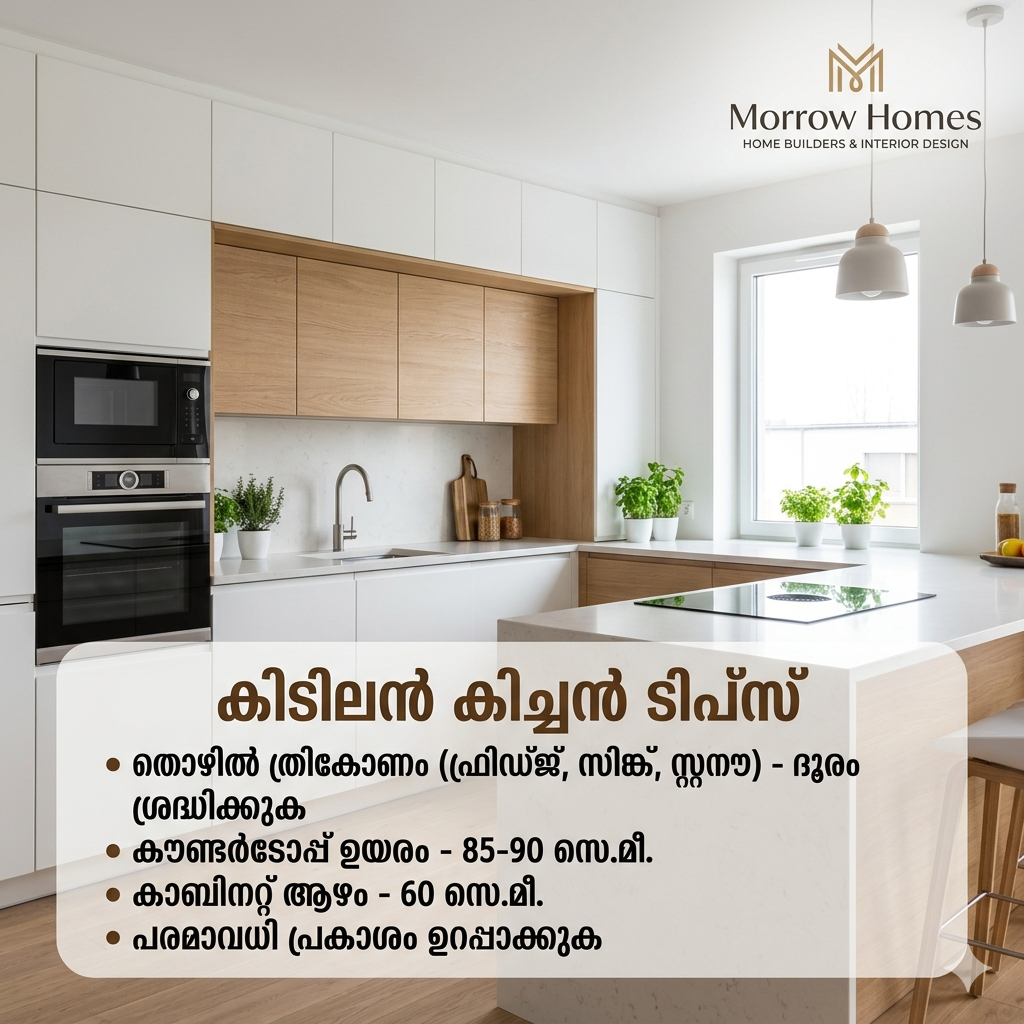
Have you ever felt completely cramped while working in your kitchen? Do you find yourself having to squeeze past an open refrigerator door, or bumping into things when trying to load the dishwasher? If this sounds familiar, the problem isn’t necessarily the size of your room—it is very likely an issue with your kitchen’s layout and dimensions.
Many homeowners focus heavily on aesthetics, choosing the perfect cabinet colors, countertops, and backsplashes. While these visual elements are important, a kitchen’s true success lies in its ergonomics. By understanding and implementing precise, standard architectural measurements, you can transform a frustrating, tight space into a seamless, highly functional culinary haven.
Here is a breakdown of the essential spacing rules and cabinet dimensions required to design a comfortable kitchen where multiple people can cook together without getting in each other’s way.
1. Clearances Around the Kitchen Island
The kitchen island is often the hub of the home, serving as a prep station, dining space, and social gathering point. However, if it is placed too close to surrounding counters, it becomes an obstacle rather than an asset.
To ensure you can effortlessly walk around the island, open appliances, and pull out drawers, you must maintain proper clearance. There should be a minimum of 508 mm (approx. 20 inches) of open clearance space around the kitchen island. This ensures that even when an appliance door is fully swung open, there is still enough breathing room to navigate the perimeter safely.
2. Slabs and Passageway Widths for Two Cooks
A kitchen is rarely a single-person zone. Whether you are prepping a meal with your partner or cleaning up while someone else cooks, a narrow workspace leads to constant collisions.
If you want a kitchen that comfortably accommodates two people working simultaneously, the aisle width between opposing slabs or countertops must be wider than standard single-cook layouts. Ideally, this distance should be at least 1220 mm (approx. 48 inches). This generous spacing allows one person to stand at the stove or sink while another comfortably walks past them without causing disruption.
3. Preventing Head Bumps: Upper vs. Lower Cabinets
A common complaint in poorly designed kitchens is hitting your head on the upper cabinets while leaning forward to chop vegetables or wash dishes. The secret to preventing this lies in staggering the depths of your upper and lower units.
Your upper cabinets must always be shallower than your base cabinets. This creates a staggered profile that clears your line of sight and prevents accidental bumps.
-
Upper Cabinet Depth: To keep things within arm’s reach without overcrowding your workspace, set the depth of your wall cabinets to 320 mm (approx. 12.5 inches).
-
Vertical Gap Between Cabinets: The vertical distance between your lower countertop and the bottom of your upper cabinets should be kept at a clean 700 mm (approx. 27.5 inches). This provides plenty of vertical clearance for small countertop appliances like mixers, blenders, and coffee makers.
4. Perfecting the Base Cabinets
The base cabinets support your heavy countertops and house major appliances, making their dimensions critical to your physical comfort. Back pain and shoulder strain are often the results of countertops that are too low or too deep.
-
Base Cabinet Height: The standard, ergonomically ideal height for lower cabinets (including the countertop thickness) is 920 mm (approx. 36 inches). This height is universally recognized as the most comfortable level for prepping food without forcing you to slouch.
-
Base Cabinet Depth: To maximize storage while allowing you to comfortably reach the back of the counter, the depth of your lower cabinets should be exactly 600 mm (approx. 24 inches).
Conclusion: Functionality First
Designing a beautiful kitchen is easy, but designing a functional one requires careful arithmetic. When layouts ignore these basic architectural guidelines, even the most expensive kitchen can become a headache to use.
Before you finalize your next renovation or home build, double-check your measurements against these standards. Ensuring you have the proper clearances around your island, a wide 1220 mm walkway, and perfectly proportioned 600 mm/320 mm cabinet depths will guarantee that your kitchen isn’t just a showpiece, but a joy to live and cook in every single day.
Watch Now: https://youtube.com/shorts/38CQIVpgcuI?feature=share