

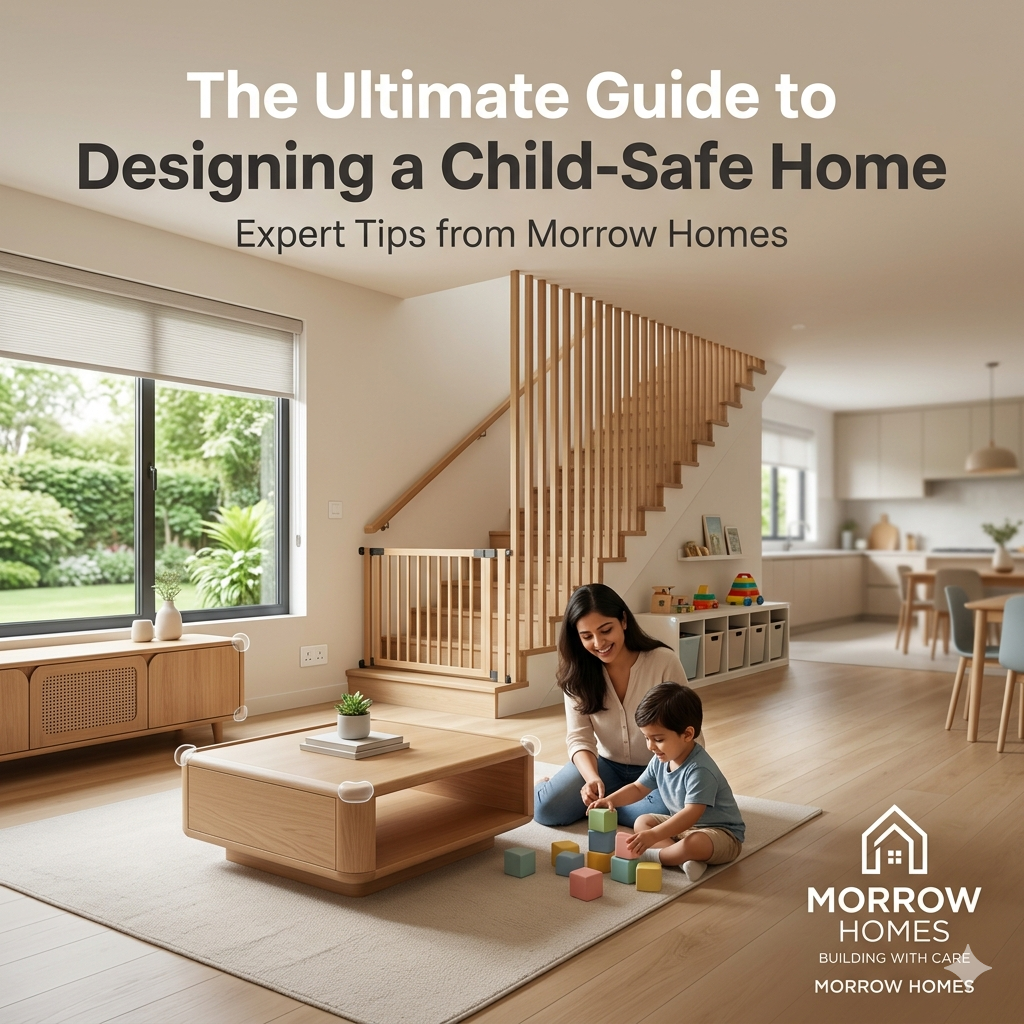
Building a home is about creating a sanctuary for your family, and when children are involved, safety becomes the cornerstone of design. At Morrow Homes, we believe that a child-safe home doesn’t have to compromise on modern aesthetics. By integrating safety into the architectural and interior planning stages, you can create a space that is both beautiful and secure for your little ones.
Here is our expert guide to designing a home that protects your most precious residents.
1. Smart Layouts and Visibility
The foundation of a child-safe home begins with a functional floor plan. Modern residential construction in Kerala is shifting toward open floor plans, which are not only great for ventilation but also allow parents to keep an eye on children from the kitchen or dining area.
-
Sightlines: Design your living spaces so there are clear lines of sight between high-traffic areas.
-
Safe Zones: Designate specific areas for play that are away from stairs or heavy kitchen equipment.
2. Flooring and Surface Safety
The materials you choose for your floors and counters play a huge role in preventing injuries.
-
Slip-Resistant Flooring: In areas prone to moisture, like bathrooms and kitchens, select matte-finish or anti-skid tiles to prevent falls.
-
Rounded Edges: When designing kitchen islands or custom cabinetry, opt for “bullnose” or rounded edges rather than sharp, 90-degree corners.
3. Electrical and Mechanical Security
As a leader in modern home building, Morrow Homes emphasizes the integration of smart technology for safety.
-
Tamper-Resistant Outlets: Install built-in safety shutters in your electrical outlets to prevent children from inserting objects.
-
Smart Automation: Use home automation systems to monitor smoke detectors and carbon monoxide levels directly from your smartphone.
-
Cordless Window Treatments: Opt for cordless blinds or motorized curtains to eliminate the risk of entanglement.
4. Staircase and Balcony Design
In multi-story residential projects, stairs and balconies require extra attention.
-
Balustrade Spacing: Ensure that the vertical bars on railings are spaced close enough together (typically no more than 4 inches) so a child cannot slip through.
-
Non-Slip Treads: Add subtle textured strips to wooden or stone stairs to provide extra grip for small feet.
5. Non-Toxic Material Selection
Quality control extends to the very air your family breathes. We recommend using Low-VOC (Volatile Organic Compounds) paints and finishes. These materials reduce the off-gassing of harmful chemicals, ensuring better indoor air quality for developing lungs.
Conclusion: Building with Care
Designing a child-safe home requires a blend of quality materials, smart technology, and thoughtful architecture. At Morrow Homes, we specialize in professional management and localized construction services in Trivandrum and Kochi, ensuring that your home is a safe haven for every generation.
Ready to build a home that puts your family’s safety first? Let’s start planning your dream project today.
View More: https://www.youtube.com/shorts/5rGw2xq4Eh8